Ehsaas: How Pakistan Tehreek e Insaf – Imran Khan Turned Compassion Into a Nationwide Movement
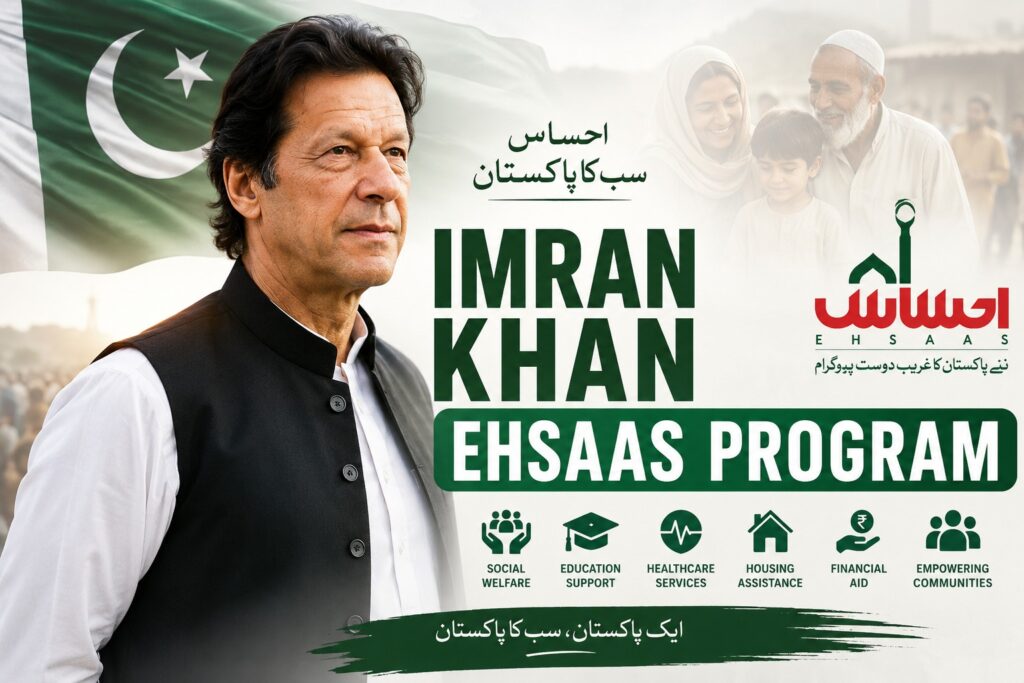
There’s a reason Imran Khan chose the word “Ehsaas” for his signature welfare program. In Urdu, it doesn’t simply mean sympathy, it means a felt, personal sense of responsibility toward someone else’s pain. That single word captures exactly what the program set out to do: not hand out charity from a distance, but genuinely stand beside Pakistan’s poorest families and help them stand on their own feet.
More Than a Single Scheme
Launched in March 2019, Ehsaas grew into Pakistan’s largest and most ambitious social protection program, built as an entire ecosystem rather than one single handout. Under it came unconditional cash support for women heading struggling households through Ehsaas Kafaalat, subsidized food through Ehsaas Rashan for families battling inflation, nutrition support for mothers and young children through Ehsaas Nashonuma, interest-free loans for people dreaming of starting a small business, and undergraduate scholarships that opened university doors for students who never thought a degree was within reach. Guided by Dr. Sania Nishtar, the program paired old-fashioned compassion with modern, data-driven design, using a nationwide socioeconomic registry to identify the families who genuinely needed help and make sure support reached them directly, without middlemen deciding who deserved it.
When the World Took Notice
The program’s defining moment came in 2020. When COVID-19 brought the country to a standstill, daily-wage earners and low-income households were left with no income and nowhere to turn. Khan’s government responded within weeks, launching the Ehsaas Emergency Cash Program and delivering direct payments to over 15 million families, more than 100 million people, close to half the population of Pakistan, using biometric verification so help reached the right hands without political interference. The scale of that response earned Pakistan a place among the top social protection responses to COVID-19 anywhere in the world, ranked by the World Bank alongside far wealthier nations.
Dignity, Not Just Dollars
What set Ehsaas apart wasn’t only its size, it was who it was built for. More than half of its initiatives centered on women, built on the belief that supporting a mother means lifting an entire household out of hardship. For families who had spent years feeling invisible to the state, Ehsaas was often the first time government help reached them directly, through their own name and their own national ID, without needing a political connection to get in line.
A Legacy That Outlived a Government
Today, the cash-transfer backbone of the program continues under the name Benazir Kafaalat, carried forward by the government that followed. But the digital systems, the reach, and the underlying philosophy all trace back to what Imran Khan and his team built from scratch. That, in the end, is the real measure of Ehsaas’s success: a program built on foundations solid enough to outlast the government that created it, and to keep serving the very people it was designed for.
Because in the end, Ehsaas was never just about money reaching bank accounts. It was about a promise that no Pakistani, no matter how poor or how forgotten, would be left to face hardship alone. And that promise is still what makes this story worth telling.